Implications for Today

Fig. 5. Carl Van Vechten, Hughes, Langston. 1942. Kodachrome photo. Beinecke Rare Book and Manuscript Library, New Haven, Connecticut. Available from: Yale Library, https://collections.library.yale.edu/catalog/2018583 (accessed December 17, 2025). Photo of Langston Hughes, author of Scottsboro Limited.
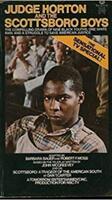
Fig. 6. Available from: IMDb, https://www.imdb.com/title/tt0074723/mediaviewer/rm4207507712/?ref_=tt_ov_i (accessed December 17, 2025). © CBS. VHS cover of Judge Horton and the Scottsboro Boys.
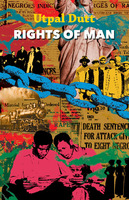
Fig. 7. Available from: Seagull Books, https://seagullbooks.org/products/rights-of-man (accessed December 17, 2025). © Seagull Books. Book cover of Indian playwright Uttpal Dutt's play, The Rights of Man.

Fig. 8. Available from: IMDb, https://www.imdb.com/title/tt0080789/mediaviewer/rm2055049984/?ref_=tt_ov_i (accessed December 17, 2025). © Acorn Media. VHS cover of Gideon's Trumpet.
Powell v. Alabama held importance, even at the time, partly from how notorious the case, and its sister cases, were.[1] Greatly proliferated by the mass media at the time, the story, and the courts’ decisions, were widely seen.[2] During a time of intense racial segregation, moreover, tensions were ostensibly high, especially surrounding a set of cases that were not only polarizing, but on the forefront of twentieth century race relations in the United States. Consequently, local and state level court systems repeatedly convicted the Scottsboro Boys, despite Supreme Court decisions seemingly in their favor.[3] Klarman writes, “Yet the Court's reversal of the first round of convictions in Powell and the second in Norris did not prevent the State from initiating a third series of prosecutions, which resulted in one more death sentence and several lengthy prison terms. Indeed, the Supreme Court reversals seemed only to further inflame local opinion, ensuring that prosecutors would not drop the cases and that juries would continue to convict and to impose draconian sentences.”[4] Thus, the impact of the Powell decision, as well as its sister cases, was to “inflame local opinion” and rather than placate, exacerbate racialized grievances. Furthermore, despite its decision, Klarman notes that the specific, judicial effect of Powell the moment it was decided, that is to “ensure better legal representation for southern black defendants,” was “unclear,” both in terms of actual representation, but also in terms of an increase in the fairness of court cases involving such.[5] Yet, however, perhaps the greatest impact of Powell was not one that occurred within the immediacy of its decision, but of one that lasted for decades thereafter. Powell would help be part of the catalyzation of the civil rights movement.[6] Klarman writes, “It is possible, however, that these Supreme Court decisions and the litigation that produced them were more important for their intangible effects: convincing blacks that the racial status quo was not impervious to change; educating them about their rights; providing a rallying point around which to organize a protest movement; and perhaps even instructing oblivious whites as to the egregious nature of Jim Crow conditions.”[7] Thus, Powell, and its sister cases, could serve as a springboard for both awareness of and resistance to Jim Crow. This is exacerbated by the repeated convictions and appeals of the Scottsboro Boys, calling further attention to the situation. Furthermore, Powell would become a large portion of the legal basis for the decision in Gideon v. Wainwright, affording all criminal defendants who were unable to pay for legal representation a guarantee of counsel by the courts, which in effect generalized Powell, consequently making manifest Justice Sutherland’s concluding paragraph.[8] It now was a “fundamental right.” This decision would become widely known through the 1980 movie Gideon’s Trumpet, which even received nominations for Primetime Emmy Awards.[9]
Perhaps, however, its longest lasting impact lies in the media that would be inspired by and directly modeled after the Scottsboro Boys’ cases, permanently etching into the memories of humanity what had occurred. From Langston Hughes’s Scottsboro Limited to NBC’s Judge Horton and the Scottsboro Boys, to Utpal Dutt’s The Rights of Man and beyond, popular media has immortalized, on a global scale, the legacy and effects of the injustice done to the Scottsboro Boys.[10] Believed today to be innocent, all of them have been pardoned, either when alive or posthumous.[11] None were put to death.[12] Yet, a pardon does not erase the injustice carried out by their convictions and subsequent imprisonment, contrary to what Governor Bentley said in 2013 when Alabama pardoned them: “While we could not take back what happened to the Scottsboro Boys 80 years ago, we found a way to make it right moving forward. The pardons granted to the Scottsboro Boys today are long overdue…Today, the Scottsboro Boys have finally received justice.”[13] Despite the injustice historically carried out, media depicting the Scottsboro Boys, Powell, and their related cases help humanity not repeat our gravest of sins.
[1] “Scottsboro Boys,” Wikipedia, December 16, 2025, https://en.wikipedia.org/wiki/Scottsboro_Boys.
[2] Ibid.
[3] Michael J. Klarman, “The Racial Origins of Modern Criminal Procedure,” Michigan Law Review 99, no. 1 (October 2000): 48, https://doi.org/10.2307/1290325.
[4] Ibid.
[5] Ibid.
[6] Ibid.
[7] Ibid.
[8] Gideon v. Wainwright, 372 U.S. 335 (United States Supreme Court 1963); Powell v. Alabama, 287 U.S. 45 (United States Supreme Court 1932).
[9] “Gideon's Trumpet (film),” Wikipedia, September 24, 2025, https://en.wikipedia.org/wiki/Gideon%27s_Trumpet_(film).
[10] “Scottsboro Boys,” Wikipedia, December 16, 2025, https://en.wikipedia.org/wiki/Scottsboro_Boys.
[11] Michael J. Klarman, “The Racial Origins of Modern Criminal Procedure,” Michigan Law Review 99, no. 1 (October 2000): 48, https://doi.org/10.2307/1290325; “Scottsboro Boys,” Wikipedia, December 16, 2025, https://en.wikipedia.org/wiki/Scottsboro_Boys.
[12] “Scottsboro Boys,” Wikipedia, December 16, 2025, https://en.wikipedia.org/wiki/Scottsboro_Boys.
[13] “Governor Bentley’s Statement on the Pardoning of the Scottsboro Boys,” Office of the Governor of Alabama, November 21, 2013, https://web.archive.org/web/20170117175539/http://governor.alabama.gov/newsroom/2013/11/governor-bentleys-statement-pardoning-scottsboro-boys/.