Close Reading: The Narrow Scope of the Decision
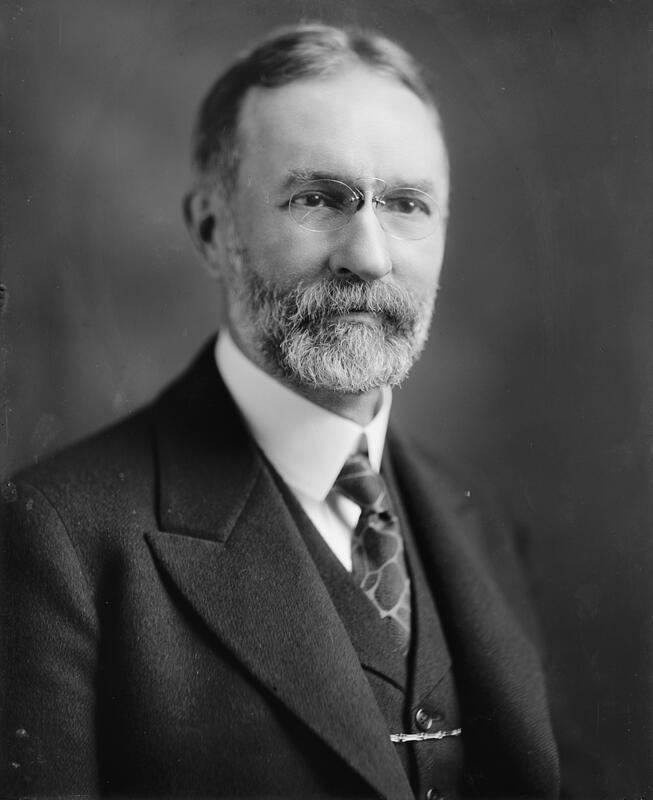
Fig. 3. Harris & Ewing, Associate Justice George Sutherland of the United States Supreme Court, Available from: Wikimedia Commons, https://commons.wikimedia.org/wiki/File:Justice_George_Sutherland_5.jpg (accessed December 17, 2025). Photo of Justice Sutherland, the author of the majority opinion.

Fig. 4. Woody Wisner, Portrait of Clarence Earl Gideon. 1964 (circa), photoprint - B&W, 7 x 5 inches. Available from: State Archives of Florida, Florida Memory, https://www.floridamemory.com/items/show/35169 (accessed December 17, 2025). Photo of Clarence Gideon, the petitioner in Gideon v. Wainwright.
One common remark regarding Powell v. Alabama is the great limitations of the court’s decision.[1] For this purpose, focus will be placed on the following passage, taken from the majority opinion: “But passing that, and assuming their inability, even if opportunity had been given, to employ counsel, as the trial court evidently did assume, we are of opinion that, under the circumstances just stated, the necessity of counsel was so vital and imperative that the failure of the trial court to make an effective appointment of counsel was likewise a denial of due process within the meaning of the Fourteenth Amendment. Whether this would be so in other criminal prosecutions, or under other circumstances, we need not determine. All that it is necessary now to decide, as we do decide, is that, in a capital case, where the defendant is unable to employ counsel and is incapable adequately of making his own defense because of ignorance, feeble mindedness, illiteracy, or the like, it is the duty of the court, whether requested or not, to assign counsel for him as a necessary requisite of due process of law…”[2]
In this passage, the court seemingly lays out that only in this specific instance is the deprivation of counsel a violation of the Fourteenth Amendment’s due process clause. The court thus largely and seemingly absolves responsibility in setting a precedent here. Instead of perhaps indicating that all criminal defendants are entitled to counsel, not just if illiterate and in a capital case, the court specifies that in the case of the trials of the Scottsboro Boys, and only in this case, due process, as guaranteed by the Fourteenth Amendment, was violated. Legal scholar and professor of law Michael J. Klarman sums this view up aptly: “Justice Sutherland's Powell opinion was written as narrowly as was humanly possible. Not only did the ruling cover only capital cases, but it seemed to be limited to the precise facts of Scottsboro – ‘the ignorance and illiteracy of the defendants, their youth, the circumstances of public hostility, the imprisonment and the close surveillance of the defendants by the military forces…’”[3] Yet, while this passage does showcase how limited the court’s decision was, this common interpretation neglects to fully take into account one of the final paragraph’s in Justice Sutherland’s majority opinion: “The United States, by statute, and every state in the Union, by express provision of law or by the determination of its courts, make it the duty of the trial judge, where the accused is unable to employ counsel, to appoint counsel for him. In most states, the rule applies broadly to all criminal prosecutions; in others, it is limited to the more serious crimes; and in a very limited number, to capital cases. A rule adopted with such unanimous accord reflects, if it does not establish, the inherent right to have counsel appointed, at least in cases like the present, and lends convincing support to the conclusion we have reached as to the fundamental nature of that right.”[4] In this concluding paragraph of the Powell decision, rather than establishing a hard limited scope, Justice Sutherland in fact opens up the Powell opinion to becoming precedent in the future for a more general establishment of right to counsel. Specifically, Sutherland’s notion that “[it] lends convincing support to the conclusion we have reached as the fundamental nature of that right [to counsel]” provides such a possibility in the future, since it implies that there is now support for an establishment of a universal (i.e., “fundamental”) right to counsel.[5]
While it is true that in its immediacy the scope of the Powell decision was narrow, and that it did not have far-reaching implications, at least purely judicial implications (its social implications, on the other hand, were quite large), it is important to understand that Powell thus opened the door for further establishment of the right to counsel. This was most notably cemented in Gideon v. Wainwright in 1963, establishing that all those without the funds to hire counsel are entitled to representation by counsel appointed by the court.[6]
[1] Michael J. Klarman, “The Racial Origins of Modern Criminal Procedure,” Michigan Law Review 99, no. 1 (October 2000): 48, https://doi.org/10.2307/1290325; “Powell v. Alabama,” Wikipedia, November 24, 2025, https://en.wikipedia.org/wiki/Powell_v._Alabama.
[2] Powell v. Alabama, 287 U.S. 45 (United States Supreme Court 1932).
[3] Michael J. Klarman, “The Racial Origins of Modern Criminal Procedure,” Michigan Law Review 99, no. 1 (October 2000): 48, https://doi.org/10.2307/1290325; Powell v. Alabama, 287 U.S. 45 (United States Supreme Court 1932).
[4] Powell v. Alabama, 287 U.S. 45 (United States Supreme Court 1932).
[5] Ibid.
[6] Gideon v. Wainwright, 372 U.S. 335 (United States Supreme Court 1963).