Case Analysis
“[...] When she went over there to take them, my three and her three, they told her they would take her three, but not mine because mine were dark.... and Mendez, you know, and hers was Vidaurri, her husband was Mexican and French, but her name was Vidaurri so that was alright, and then she said, well, if you can’t take them I can’t leave mine either, so she came back to the ranch” - Felicitas Mendez (Ayala & McCormick, 24)
The Inciting Incident:
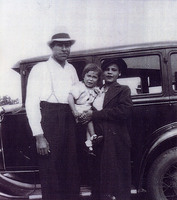
It should’ve been just like any other day. After all, Felicitas Mendez’s husband, Gonzalo, had attended the 17th Street Elementary school himself. The Mendezes were one of few Mexican American tenant farmers in the county at the time, meaning they had greater economic means that others lacked. Felicitas asked her sister-in-law, Soledad Vidaurri, to take her three children along with Vidaurri’s to enroll at 17th Street. It came as a shock when Vidaurri returned, bearing news that the School clerk had denied admission to the Mendez children, but not her own. In solidarity with her brother’s family, Vidaurri chose to not enroll her children at the school, in spite of mandatory attendance laws in the state at the time(Ayala & McCormick, 24).
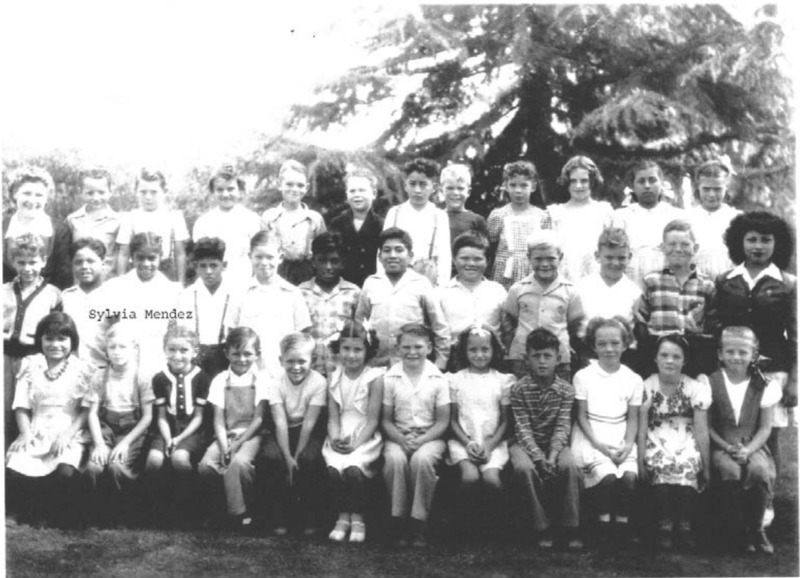
Instead, the school clerk redirected the Mendez children—Sylvia, Gonzalo, and Geronimo—to enroll at Hoover school, the ‘Mexican’ school in the Westminster School District. Although a number of ‘Mexican’ schools were perceived as possessing better resources or staff compared to the White schools, Hoover itself was dilapidated, lacked resources, and only provided vocational training(Ayala & McCormick, 26). The Mendezes were offered two separate ‘compromises,’ the first for a bond measure to rebuild the school, which failed, and the second to allow just the Mendez children to attend 17th Street. However, the Mendez family was furious, and understood the lawsuit as both benefitting the whole community, as well as ensuring their children would be perceived as fully ‘American’ (Ayala & McCormick, 27). The couple set to work, using their financial resources to fund transportation for trial depositions and reimbursements for loss of pay. Soon, their suit against Westminster School District would be combined with ones from Garden Grove, Santa Ana, and El Modena (Arriola, 185).
Judge McCormick’s Ruling:
Oral Arguments were presented before Judge Paul J. McCormick of the United States District Court for the Southern District of California in 1945. David Marcus, a Los Angeles attorney with connections to the Mexican Consulates, argued on behalf of the plaintiffs. Joel Ogle, the Orange County Counsel, argued on behalf of the defendant school districts (Wollenberg, 325). Although there were some questions surrounding jurisdiction, the case revolved around two factors. Is the segregation of, “Mexican and Latin,” children a legitimate state action taken by the school district for ‘Americanization’ purposes under Plessy v. Ferguson? Or was it a violation of Mexican American children’s Fourteenth Amendment rights as well as the California education code?
McCormick’s ruling was simple and straight to the point. California did not allow for the segregation of groups outside of, “Mongolian, Chinese, and Indian,” students, and therefore had taken arbitrary action outside of the due process of law(Wollenberg, 326). In addition, Plessy v. Ferguson was considered non-applicable as California law did not provide for the existence of separate, ‘Mexican’ schools. However, rather than stop there, McCormick chose to step in on the question of supposed ‘Americanization’ efforts, and used contemporary sociological and psychological literature to justify his points. He states, “Evidence clearly shows that Spanish-speaking children are retarded in learning English by lack of exposure to its use by segregation. …” (64 F. Supp. 549)
Enter the Ninth Circuit Court of Appeals:
10 months later the district appealed, and a case from the sleepy “Citrus Society” of Southern California had made its way into national news. The ACLU, NAACP, National Lawyers Guild, American Jewish Congress, Japanese American Citizens League and even Attorney General of California Robert Kenny had filed amicus curiae briefs on behalf of the plaintiffs. Arguments broadly followed the same lines as before. Defendants denied that there had been an equal protection violation, and plaintiffs warned that an affirmation of the district could lead to the segregation of any distinct ethnic group, including Germans (Wollenberg, 327). In a unanimous decision, the seven judges upheld the McCormick decision, but it was narrower and stuck to dry facts.
Once more, the Judges sought to assert jurisdiction in the case, but dedicated time towards basing it in precedent. First, they fulfilled the requirements of Cumming v. Board of Education—an early school segregation case—by demonstrating that there was a clear violation of constitutional rights, specifically that of the Fourteenth Amendment(Ettinger, 485). Second, they held that the school boards had been acting under state authority, and as a result had been perpetuating an illegal ‘state action.’ In the opinion specifically, they phrase it as whether or not state officers are acting under the ‘color of law.’ To put it simply, the ‘color of law’ means they are acting under and with authority delegated to them by the state of California, and thus were taken as legitimate state officers. Therefore, their violation of Mexican American children’s constitutional rights with that authority gave the Court of Appeals the jurisdiction they required.
After they established jurisdiction, the court moved to its two holdings. First, “The segregation in this case is without legislative support and comes into fatal collision with the legislation of the state” (161 F. 2d. 780). Although Judge Stephens never quite gets to, ‘separate but equal is inherently unequal,’ the second holding of his opinion is clear: the segregation of Mexican children in California schools is a violation of the Fourteenth Amendment and the Federal Constitution, “[...] Depriving them of liberty and property without due process of law and by denying to them the equal protection of the laws” (161 F. 2d. 781). In effect, the mere existence of segregated schools—even if substantially equal—constituted a violation of their constitutional rights.
“We are not tempted by the siren who calls to us that the sometimes slow and tedious ways of democratic legislation is no longer respected in a progressive society” (161 F. 2d. 780)
Although the Court’s holding was monumental, they chose to stop short of outright finding Plessy v. Ferguson unconstitutional, dashing the hopes of the amicus curiae. They argue that even if judges should stay aware of the times, they refuse to go so far as to produce what amounts to legislation through their constitutional powers of interpretation. They state: “We are not tempted by the siren who calls to us that the sometimes slow and tedious ways of democratic legislation are no longer respected in a progressive society” (161 F. 2d. 780). Judge Stephens’ tone here is paternalistic and outright humiliating towards Civil Rights Activists anxiously watching the case. Even worse, the school districts chose to decline to appeal the case to a higher court, thus making it only effective precedent in the Ninth District.