Aftermath
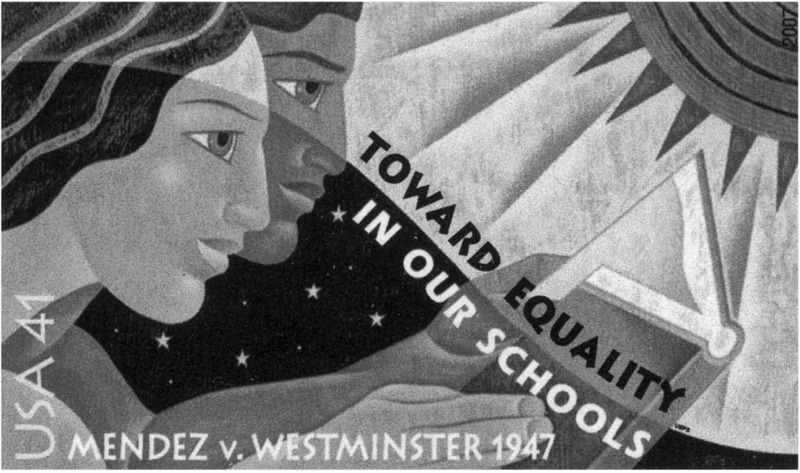
Stamp Honoring the Mendez v. Westminster Case
Stamp issued by the U.S. Postal Service in September 2007
Mendez v. Westminster may not have been the case to topple Plessy v. Ferguson, but it represents a major shift in California politics, an explosion in Latino political organization, and the incorporation of sociological literature that would be critical to the Brown v. Board decision. By the time the decision was issued on April 14th, 1947, the dismantling of legal school segregation in California was already in motion. Just two months after the decision, the ‘Anderson’ Bill was signed into law by then Governor Earl Warren. Seven years later, the same man would author the unanimous opinion in Brown v. Board of Education (Wollenberg, 329).
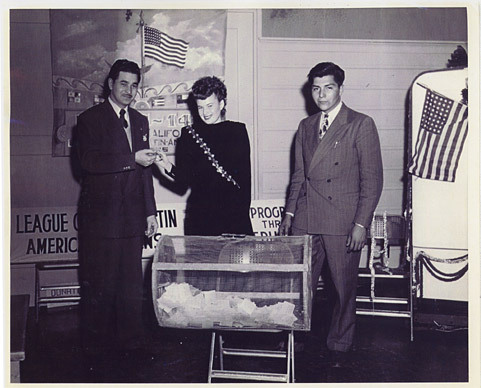
The burst of Latino political organization across the country was in part enabled by the success of Mendez. Organizations like the League of United Latin American Citizens (LULAC) found their footing while ones like the Latin American Organization (LAO) united Mexican American veterans to fight against discrimination(Ayala & McCormick, 26). International events like the Holocaust and the formation of the United Nations internationalized Human Rights issues and put pressure on the US political system to practice what they preached(Wollenberg, 323).
Judge McCormick’s arguments on how, “The methods of segregation . . . foster[ed] antagonisms in the children and suggest[ed] inferiority among them where none exist[ed],” (64 F. Supp. 549) were merely the first act of evidence that would soon topple segregation in education at the national level. Even if Mendez is never cited in Brown, its influence is omnipresent.
Mendez, and the passage of the Anderson Bill, were unfortunately not the hoped finale of segregation in the Golden state. The rapid growth and urbanization of the Mexican population would lead to a gordian knot of de facto segregation that California has struggled to detangle even to this day. A report by the UCLA Civil Rights found that: “California is the state with the highest proportion of intensely segregated schools in the continental U.S. The proportion of these schools with greater than 90% students of color quadrupled over the last three decades, rising from 11.4% to 44.5%” (Orfield & Pfleger, 9). California may have once led the nation in dismantling legal school segregation; but unfortunately, just because something isn’t legal, doesn’t mean that it doesn’t happen.